

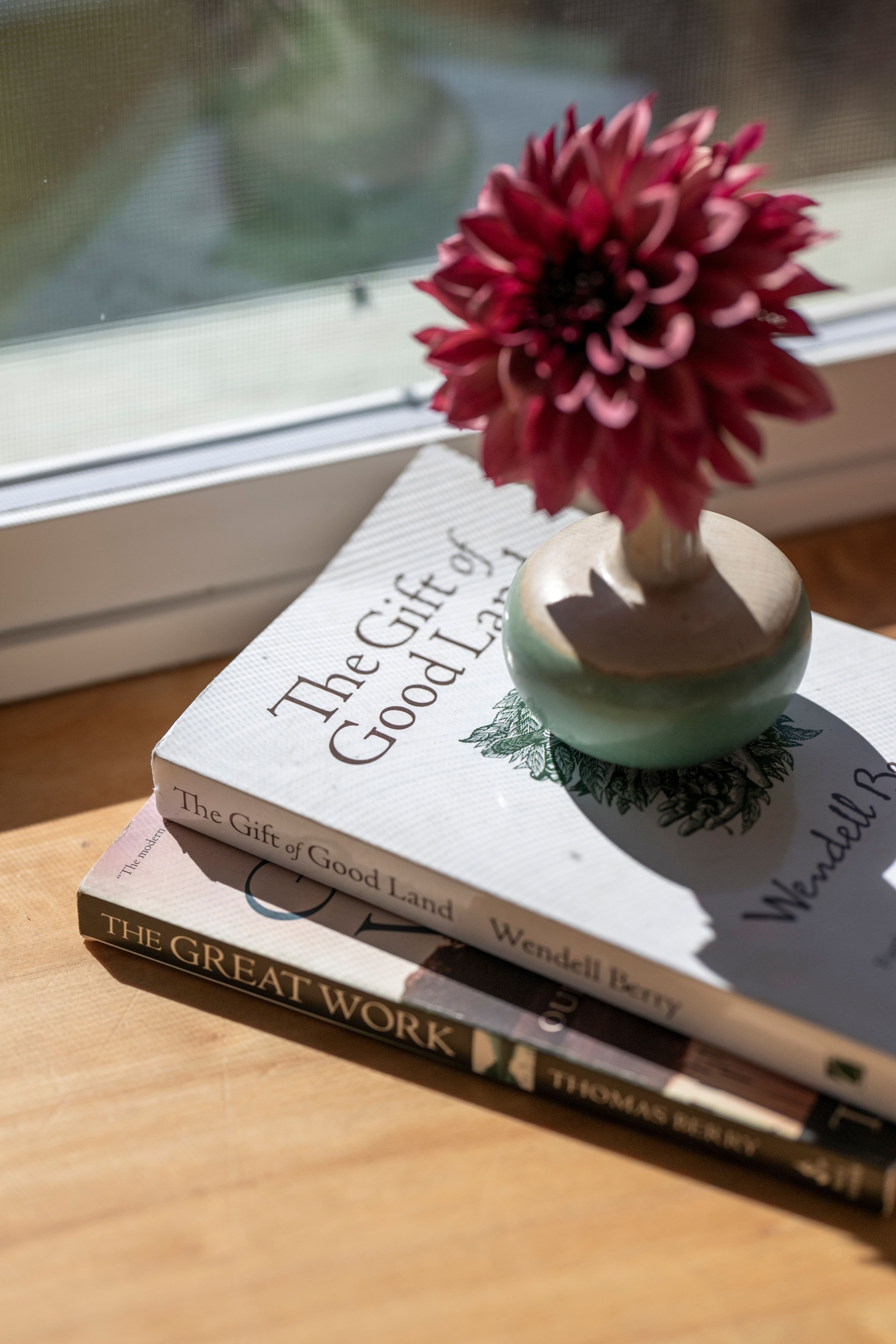
The gift of good land: what we are reading
The Reading Room
Agrihoods are usually justified in economic terms. The farm drives absorption, the open space carries a premium, the food program differentiates the project from the subdivision down the road. All of that is true yet none of it is sufficient, because a farm run solely as an amenity eventually gets managed like one, and amenities get cut when the pro forma tightens.
Thomas Berry's argument in "The Gift of Good Land", aimed at agriculture rather than development, posits that land comes to us conditionally. We hold it as long as we keep faith with it. That reframes the question we are actually asking when we entitle a piece of ground. Not what the land can yield, but what it obligates us to.
This is the part of our work that resists underwriting. A community organized around soil, water, and season asks something of the people who live there, and the places that endure are the ones where that ask was made from the beginning rather than a veneer sold as a lifestyle.
Berry gives us the language for the obligation. The structuring is our problem to solve, and what a gift that is.