

Consolidated or Separate, the Structural Choice Behind Every Agrihood
Longtime farmers and community tenders Steffen and Rachel Schneider have been part of Hawthorne Valley since 1980, when Steffen first came to the farm to learn biodynamics and met Rachel during that same visit. He returned in 1989 to run the dairy and over time came to lead the farm operation, which by then had grown into a multi-faceted enterprise with a store attached to it.
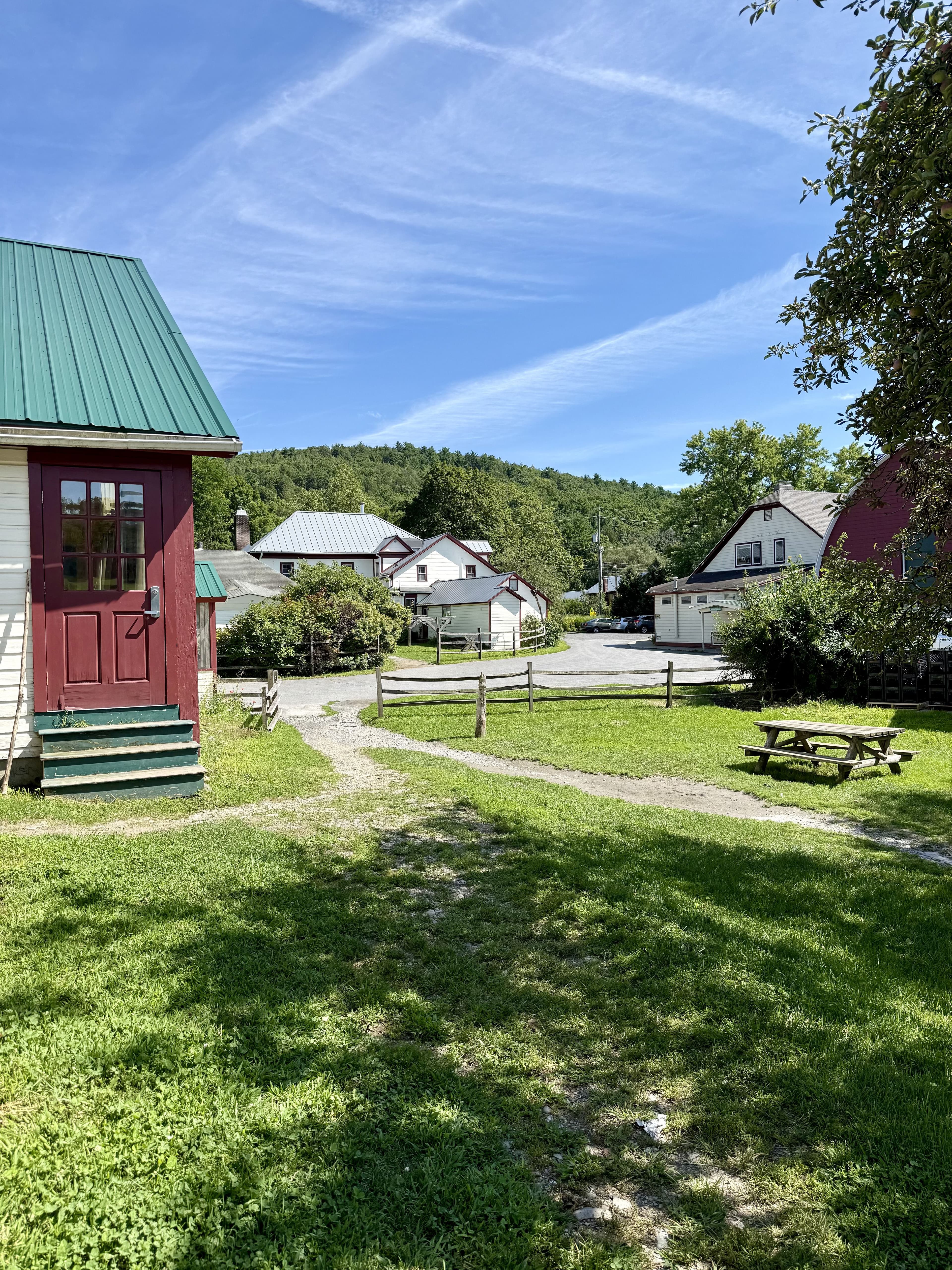
Hawthorne Valley is a beautiful and complex organization with a community that spreads well beyond its 900+ acre borders. It weaves together a biodynamic farm, a farm store that rivals any co-op you would find in a city, and a Waldorf school running from early childhood through twelfth grade, among many other endeavors.
Steffen and Rachel recounted a story about how, as the farm and store grew, the organization had to decide how to oversee its own increasing complexity. There was no executive leadership layer at the time and the enterprises were largely run by the people who carried them.
Two paths were discussed: Create a land trust and separate the various enterprises into their own corporate entities in order to instill a spirit of entrepreneurship, or create a leadership layer that would oversee a consolidated organization. The community chose the latter, and that is the structure they have operated under since.
This is a common fork in the road for agrihoods, where by nature there are various activities and enterprises sharing space on a single property. Traditional master planned communities typically rely on leasing and selling land to operators who establish and run the commercial enterprises. That can be a fantastic model as it reduces operational complexity and risk for the developer. However, it does not always present the right solution for an agrihood.
Precisely what makes agrihoods so compelling is also what makes the organizational structure so important. Farming is not a commercial enterprise analogous to a grocery store, a retail tenant, or a multifamily building. Farms can be profitable, but they also require unique support for capital expenses, budget shortfalls, and farmworker housing. The last thing you want is for the farm to fail because of a structure that never fully accounted for the needs of this kind of community infrastructure.
Hawthorne Valley's structure has endured the test of time, and I get the sense there are days when it would be much easier to have each pillar stand more independently. When a tractor goes out unexpectedly, it could mean the end of a new bike repair shop the school was planning on.
That is the cost of a shared balance sheet. The separated path carries its own. Independent entities can raise their own capital, run their own margins, and fail on their own terms, which works well right up until the farm has a bad year and nobody is obligated to carry it.
Neither is the correct answer. A consolidated structure buys resilience and a shared mission at the price of speed and entrepreneurial edge. Separate entities with a trust holding the farmland buy autonomy and clean accountability at the price of a safety net. There are hybrids in between, where the farm sits inside a nonprofit or trust with its own support mechanisms while the commercial enterprises operate independently on leases. Every version moves the risk somewhere yet none of them make it disappear entirely.
What matters is that the choice gets made on purpose. Governance gets set alongside the entitlement and the capital stack, and it is far harder to unwind later than a site plan. Most projects inherit a structure by default, borrowing the conventions of a conventional master planned community, and only find out years later whether the farm fits inside it.
The question worth asking at the outset is not which model is cleanest. It is what happens to the farm in its worst year. Whoever is on the hook in that scenario is the real answer to the structural question, and it is worth naming that party before the first lot is sold.